Showing posts with label Quaker. Show all posts

Friday, January 21, 2011

BLAKE AS PILGRIM

Blake made one illustration to Pilgrim's Progress which is not considered to be a part of the 28 plate series which Norvig focused her attention on. It belongs to the National Gallery of Art in Washington, DC rather than to the Frick Collection in New York. It was once called A Warrior with Angels but now goes by the name of Christian with the Shield of Faith, Taking Leave of His Companions.


A friend has made the observation that the central character in this image which represents Christian, has the appearance of William Blake himself as a young man. Perhaps Blake cast himself and his loved ones or his characters in the roles of Christian and his companions. The appearance of Christian in this image does not resemble Christian in the series, and these companions don't appear elsewhere in the illustration to Pilgrim's Progress.

If Blake identified with Bunyan's Christian and inserted himself in an illustration, who would be the lovely ladies who accompany him? Could one be Catherine (the one to Blake's left), his companion in life, his Enitharmon? I suggest that the woman to Christian's (Blake's) right is his Jerusalem the source of his inspiration and imagination, the Divine Vision which he recognized in every individual. Vala the shadow of Jerusalem is shown perhaps as the woman behind Jerusalem in the second tier. The fourth woman who is reaching upward as if a connecting link to the Celestial City may be Enion of whom Damon says "The eternal [not the temporal] Enion rises in the dawn of the third day, in a whirlwind...she casts off her death-clothes, for the winter is gone, and all nature is rejuvenated. Tharmas embraces her and raises her through the heavens, sounding his trumpet to wake the dead." These identifications would turn the image into an illustration for Blake's life and myth rather than for Bunyan's allegory.

Jerusalem, PLATE 54 (E 203)
"In Great Eternity, every particular Form gives forth or Emanates
Its own peculiar Light, & the Form is the Divine Vision
And the Light is his Garment This is Jerusalem in every Man
A Tent & Tabernacle of Mutual Forgiveness Male & Female
Clothings.
And Jerusalem is called Liberty among the Children of Albion"

Jerusalem, PLATE 39 [44],(E 187)
"Man is adjoind to Man by his Emanative portion:
Who is Jerusalem in every individual Man: and her
Shadow is Vala, builded by the Reasoning power in Man
O search & see: turn your eyes inward: open O thou World
Of Love & Harmony in Man: expand thy ever lovely Gates."

If Blake broke away from the overall structure of his series, it is understandable that he would withdraw the illustration from the series. It would have become his personal record of his role as a pilgrim or traveller to Eternity.

Blake's ideas about the destination of the traveller are different from Bunyan's since Bunyan was a Puritan who adhered to the doctrine of predestination including eternal damnation. Bake's traveller's journey would not be measured by moral virtue or inclusion in the class of the elect. Blake would not be receptive to the accumulation of doctrine through which the Puritans sought to regulate and demonstrate their status as among the saved. Bunyan stopped short of the entry into the divine province by his dreamer, although the pilgrims entered the city after crossing the river of death. Bunyan's Celestial City was to be the destiny in the afterlife of those who followed the path outlined for the repentant sinner. One of Bunyan's final scenes shows that one ignorant of the requirements of that route would find himself destined for hell. In contrast Blake's teaching was that error would be annihilated so that all may experience Eternity through connecting with the inner Divinity (that of God in every man as Quakers say.)

Consider the words in the following passage from the beginning of Jerusalem as Blake's response to Bunyan's dreamer who followed the journey of the pilgrim. Awake from the dream that 'states' through which men pass are human existence. Awake from the image of God as afar rather than within. Awake from the idea that Evil must be punished rather than forgiven. Awake to the idea that the Emanation is to be interiorized not projected or rejected.

Jerusalem, Plate 4,(E 146)
"Awake! awake O sleeper of the land of shadows, wake! expand!
I am in you and you in me, mutual in love divine:
Fibres of love from man to man thro Albions pleasant land.
In all the dark Atlantic vale down from the hills of Surrey
A black water accumulates, return Albion! return!
Thy brethren call thee, and thy fathers, and thy sons,
Thy nurses and thy mothers, thy sisters and thy daughters
Weep at thy souls disease, and the Divine Vision is darkend:
Thy Emanation that was wont to play before thy face,
Beaming forth with her daughters into the Divine bosom
[Where!!]
Where hast thou hidden thy Emanation lovely Jerusalem
From the vision and fruition of the Holy-one?
I am not a God afar off, I am a brother and friend;
Within your bosoms I reside, and you reside in me:
Lo! we are One; forgiving all Evil; Not seeking recompense!
Ye are my members O ye sleepers of Beulah, land of shades!"

Saturday, October 16, 2010

The Quaker Poet

"That of God in everyone" virtually defines Quakerism to many (especially East Coast) Quakers. So look at Blake's A Divine Image:
"Songs of Innocence 1789
"To Mercy Pity Peace and Love.
All pray in their distress:
And to these virtues of delight
Return their thankfulness.

For Mercy Pity Peace and Love,
Is God our Father dear:
And Mercy Pity Peace and Love,
Is Man his child and care.

For Mercy has a human heart
Pity, a human face:
And Love, the human form divine,
And Peace, the human dress.

Then every man of every clime,
That prays in his distress,
Prays to the human form divine
Love Mercy Pity Peace,

And all must love the human form.
In heathen, Turk or jew,
Where Mercy, Love and Pity dwell,
There God is dwelling too." (Erdman 32)

You can hardly read that poem without awareness of Blake's inveterate Universalism, also shared by most Quakers interested in Christian theology. Look especially at the last verse and translate into prose: God is dwelling in heathens, Turks (muslims) and Jews.
Or perhaps God is dwelling in heathens, like Muslims and Jews.

(This like everything else Blake wrote is subject to many interpretations; in fact that's the real meaning of the word poetry.)

When I started reading Blake, I looked and looked for some mention of Quakers because his values in general seemed remarkably similar to Quaker values. But it was in vain. I wondered why; then I realized that it was most likely because of his keen awareness that Quakers were in the forefront of the Industrial Revolution.

The Industrial Revolution was anathema to Blake; he spoke of the satanic mills:
("And was Jerusalem built here
Among these dark Satanic Mills?")
(from the preface to Milton; Erdman 95)

Another pointer is found in London where he spoke of the mind forg'd manacles; here I think he meant the systematic propaganda that
lulled the Enlish peasants (and most of us today) into a comfortable acceptance of our actual slavish lot in life.

The Industrial Revolution and globalization as well have enormously enriched the already wealthy and impoverished the poorest among us. In the long run most of us see a positive (for example 300 million Chinese peasants are said to have escaped poverty; while a few million Americans lost their jobs).

But for Blake it was a feeling thing, and he had very powerful feelings about all the poor wretches who crowded the streets of London after being disinherited from their land rights throughout England.

Aside from the matter of the Industrial Revolution the values that Blake and Quakers had in common are numerous:

George Fox believed deeply in removing the occasion of War; Blake hated war.

Quakers have always despised the slave trade; so did Blake.

There are many others; they may lead to other posts.

Saturday, October 9, 2010

BLAKE'S TRIAL

Image from "William Blake's illustrations to the Divine Comedy"

William Blake had the misfortune of being placed on trial for sedition in 1803. Although Blake was acquitted in the matter, David Erdman believes that the ordeal caused Blake to become cautious in speaking out on the subject of politics. The episode began with Blake removing from his garden a private in the Royal Dragoons. Schofield brought charges of 'assault and Seditious words.' For five months it was uncertain if Blake would be found guilty and imprisoned or could resume his normal artistic pursuits without fear of harassment. Britain was at war and there was little tolerance for dissent against the empire. The stress took a toll on William and Catherine.

David V Erdman, in William Blake: Prophet Against Empire commented on the incident which led to the accusations and the effect it had on Blake and his poetry in his chapter 'Another England There'.

These are quotes from Erdman's Chapter 22:

Page 412
"Inevitably the effect of the experience was to intensify Blake's self-censorship and the tension between man and prophet. He parades his name and address and declares his theme to be social and contemporary - 'I write in South Molton Street, what I both see and hear In regions of Humanity, in London's opening streets' (J 34[38]). Yet he seeks to prevent 'Satan's Watch-fiends' from entering into the meaning of what he writes by concealing, as he says in riddles, the 'Gate' in his own head (J 35[39]. He tempts the curious with reverse writing which must be read in a mirror."...
Page 414
"The most immediate poetic record of Blake's suffering in time of trial, however, is the plaintive notebook ballad partly incorporated in the preface to the third chapter of Jerusalem and partly transcribed into another manuscript as The Grey Monk. This story of a tortured pacifist who will not recant is associated with Blake's trial by the fact that the Gothic courtroom of Chichester was known to have been the chancel of a Grey Friars convent church. The monk's martyrdom is that of an honest man who has written against war and empire and whose writings have been found out."
Page 415
"To write against War has nevertheless been his duty as a soldier of Christ, and he is ready to endure the tortures of 'the wrack & grinding chain' for the sake of his 'Brother,' the poor man, 'starved between two walls' (that is to say, in the street) and the poor man's children, whose cry ever 'my Soul appalls.'"

Erdman tells us that in the original draft the 'lazy monk' was the 'seditious monk'.

Here is the passage in Jerusalem, (Plate 52, (E 201)) associated with Blake's 'run in with the law':

"I saw a Monk of Charlemaine
Arise before my sight
I talkd with the Grey Monk as we stood
In beams of infernal light

Gibbon arose with a lash of steel
And Voltaire with a wracking wheel
The Schools in clouds of learning rolld
Arose with War in iron & gold.

Thou lazy Monk they sound afar
In vain condemning glorious War
And in your Cell you shall ever dwell
Rise War & bind him in his Cell.

The blood. red ran from the Grey Monks side
His hands & feet were wounded wide
His body bent, his arms & knees
Like to the roots of ancient trees

When Satan first the black bow bent
And the Moral Law from the Gospel rent
He forgd the Law into a Sword
And spilld the blood of mercys Lord.

Titus! Constantine! Charlemaine!
O Voltaire! Rousseau! Gibbon! Vain
Your Grecian Mocks & Roman Sword
Against this image of his Lord!

For a Tear is an Intellectual thing;
And a Sigh is the Sword of an Angel King
And the bitter groan of a Martyrs woe
Is an Arrow from the Almighties Bow!"

Here is a link to the longer poem,
The Grey Monk, from the Pickering Manuscript, (E 489).

Thursday, October 7, 2010

GOD IN US

Jeremiah 23
[23] Am I a God at hand, saith the LORD, and not a God afar off?
[24]Can any hide himself in secret places that I shall not see him? saith the LORD. Do not I fill heaven and earth? saith the LORD.

From the beginning to the end of his work Blake attempted to communicate his image of God. Primarily Blake's experience was of what theologians call the immanent God, a God who is accessible and ever-present. When we gather together a number of Blake's references to God it is obvious that Blake's God was the incarnate God present within the whole of creation and particularly within humanity.

THERE IS NO NATURAL RELIGION (E 2)
"VII The desire of Man being Infinite the possession is Infinite
& himself Infinite
Conclusion, If it were not for the Poetic or Prophetic
character. the Philosophic & Experimental would soon be at the
ratio of all things & stand still, unable to do other than repeat
the same dull round over again
Application. He who sees the Infinite in all things sees
God. He who sees the Ratio only sees himself only.

Therefore God becomes as we are, that we may be as he is"

Songs of Innocence and Experience, (E 9)
Little Black Boy
"Look on the rising sun: there God does live
And gives his light, and gives his heat away.
And flowers and trees and beasts and men recieve
Comfort in morning joy in the noon day.

And we are put on earth a little space,
That we may learn to bear the beams of love,
And these black bodies and this sun-burnt face
Is but a cloud, and like a shady grove."

_______________________________
Milton Plate 45, Forgiveness
Songs of Innocence, (E 12)
The Divine Image.


"To Mercy Pity Peace and Love,
All pray in their distress:
And to these virtues of delight

Return their thankfulness.

For Mercy Pity Peace and Love,
Is God our father dear:
And Mercy Pity Peace and Love,
Is Man his child and care.

For Mercy has a human heart
Pity, a human face:
And Love, the human form divine,
And Peace, the human dress.

Then every man of every clime,
That prays in his distress,
Prays to the human form divine
Love Mercy Pity Peace.

And all must love the human form,
In heathen, turk or jew.
Where Mercy, Love & Pity dwell,
There God is dwelling too"

Milton, PLATE 32 [35],(E 131)
"But the Divine Humanity & Mercy gave us a Human [Hebrew text -multitudes]
Form as multitudes
Because we were combind in Freedom & holy Vox Populi [voice of the people]
Brotherhood"

Milton, Plate 32 [35], (E 131)
"For God himself enters Death's Door always with those that enter
And lays down in the Grave with them, in Visions of Eternity
Till they awake & see Jesus & the Linen Clothes lying
That the Females had Woven for them, & the Gates of their Fathers
House"

Jerusalem, Plate 4, (E 146)
"I am not a God afar off, I am a brother and friend;
Within your bosoms I reside, and you reside in me:
Lo! we are One; forgiving all Evil; Not seeking recompense!"

Jerusalem, Plate 5, (E 147)
"Trembling I sit day and night, my friends are astonish'd at me.
Yet they forgive my wanderings, I rest not from my great task!
To open the Eternal Worlds, to open the immortal Eyes
Of Man inwards into the Worlds of Thought: into Eternity
Ever expanding in the Bosom of God. the Human Imagination
O Saviour pour upon me thy Spirit of meekness & love:
Annihilate the Selfhood in me, be thou all my life!
Guide thou my hand which trembles exceedingly upon the rock of
ages,

While I write of the building of Golgonooza
Ye are my members O ye sleepers of Beulah, land of shades!"

Jerusalem
, Plate 38 [43], (E 184)
"O God of Albion descend! deliver Jerusalem from the Oaken Groves!

Then Los grew furious raging: Why stand we here trembling around
Calling on God for help; and not ourselves in whom God dwells
Stretching a hand to save the falling Man: are we not Four
Beholding Albion upon the Precipice ready to fall into
Non-Entity:"

Jerusalem, Plate 45 [31],(E 195)
"So spoke Los, travelling thro darkness & horrid solitude:
And he beheld Jerusalem in Westminster & Marybone,
Among the ruins of the Temple: and Vala who is her Shadow,
Jerusalems Shadow bent northward over the Island white.
At length he sat on London Stone, & heard Jerusalems voice.

Albion I cannot be thy Wife. thine own Minute Particulars,
Belong to God alone. and all thy little ones are holy
They are of Faith & not of Demonstration: wherefore is Vala
Clothd in black mourning upon my rivers currents, Vala awake!
I hear thy shuttles sing in the sky, and round my limbs
I feel the iron threads of love & jealousy & despair."

Satiric Verses, (E 516)
"To God

If you have formd a Circle to go into
Go into it yourself & see how you would do"

Annotations to Lavater (E 599)
"God is in the lowest effects as well as in the highest
causes for he is become a worm that he may nourish the weak
For let it be rememberd that creation is. God descending
according to the weakness of man for our Lord is the word of God
& every thing on earth is the word of God & in its essence is God"

As well as expressing the sentiments of the prophet Jeremiah, Blake was reflecting the message of the New Testament as stated by Paul in Colossians 1:

[26] Even the mystery which hath been hid from ages and from generations, but now is made manifest to his saints:
[27] To whom God would make known what is the riches of the glory of this mystery among the Gentiles; which is Christ in you, the hope of glory:

Monday, August 2, 2010

Blake and Religion

Northrup Frye, an ordained Canadian minister, as a young man wrote a thesis entitled Fearful Symmetry, which became the magisterial exposure of Blake's thought to the academic world. His primary calling became English Literary Criticism, and he won signal distinction in that field (especially a book called The Anatomy of Criticism).

Later in life Frye said that if he had it to do over he would not write a sophisticated academic work about Blake, but something more like Percival's introductory survey. He called his last (monumental!) two volume work The Great Code of Art or The Bible as Literature. That's an invaluable work for learning Blake.

In Britain's early 19th Century the Enlightenment had a marked effect on religious thought; Deism was ascendant, the idea that God created the world and wound it up like a clock and thereafter retired from any interest in it. We are to God what ants are to us.

As you can imagine Bible soaked and God intoxicated Blake despised Deism. But he equally despised what he took to be the opposite, which he called (among other things) Druidism, the most primitive form of religion, including human sacrifice.

Druidism fit Blake's concept of established religion, whose leaders enthusiastically supported the king's wars; in the same way the religious leaders today have emphatically supported the government's wars. (The government, established religion and the military industrial complex were like three peas in a pod in Blake's day.)

Here's one of Blake's reactions to that sad reality:

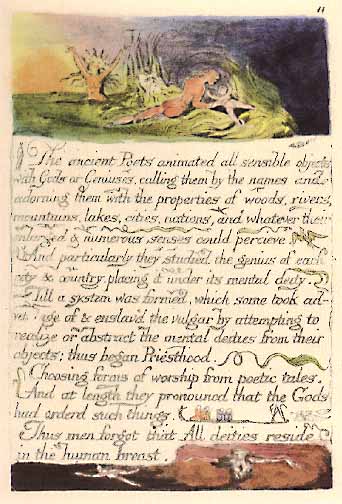
(Plate 11) (of the Marriage of Heaven and Hell)
"The ancient Poets animated all sensible objects with Gods or Geniuses, calling them by the names and adorning them with the properties of woods, rivers, mountains, lakes, cities, nations, and whatever their enlarged & numerous senses could percieve.

And particularly they studied the genius of each city & country, placing it under its mental deity.

Till a system was formed, which some took advantage of & enslav'd the vulgar by attempting to realize or abstract the mental deities from their objects; thus began Priesthood.

Choosing forms of worship from poetic tales.
And at length they pronounc'd that the Gods had order'd such things.
Thus men forgot that All deities reside in the human breast."
According to Blake God is within-- you and me, everyone. In this he closely resembled the Quakers who fundamentally speak of that of God in you/me/everyone. The God within is creative, a Creator of Art. This depends upon imagination, intuition, the expression of spiritual/eternal ideas in tangible things-- like words (the Bible), music, and representations of the human form in its various states.

Here's an example in the Laocoon (E274) of how Blake expressed this idea:
"Prayer is the Study of Art
Praise is the Practise of Art
Fasting &c. all relate to Art
The outward Ceremony is Antichrist
Without Unceasing Practise nothing can be done

Practise is Art If you leave off you are Lost

A Poet a Painter a Musician an Architect: the Man
Or Woman who is not one of these is not a
Christian"

Monday, May 31, 2010

Severe Contentions of Friendship

From Milton (Plate 41 [48],  
"These are the destroyers of Jerusalem, these
are the murderers
Of Jesus, who deny the Faith & mock at Eternal Life:
Who pretend to Poetry that they may destroy Imagination;
By imitation of Natures Images drawn from Remembrance
These are the Sexual Garments, the Abomination of
Desolation
Hiding the Human lineaments as with an Ark & Curtains
Which Jesus rent: & now shall wholly purge away with Fire
Till Generation is swallowd up in Regeneration.
"Then trembled the Virgin Ololon & replyd in clouds of
despair
Is this our Femin[in]e Portion the Six-fold Miltonic Female
Terribly this Portion trembles before thee O awful Man
Altho' our Human Power can sustain the severe contentions
Of Friendship, our Sexual cannot: but flies into the Ulro."

(Erdman 142-3)
And from Jerusalem, Plate 91:
"I never made friends but by spiritual gifts;
By severe contentions of friendship & the burning fire of
thought.
He who would see the Divinity must see him in his Children
One first, in friendship & love; then a Divine Family, &
in the midst
Jesus will appear;" (Erdman 251)
Alfred Ames, son of a Congregational minister in Kansas, found a better faith (for himself) in a college in Illinois when he became a Quaker. He was a man of principle and a flaming liberal, one of his principles being an abhorrence of violence; in the early forties he was spared 'conscientious objection' by a medical diagnosis of flat feet.

During the war his Quaker Meeting was dominated by a man with contrary principles: his son was a Lt. Col. in the Marine Corps. This dominating 'Quaker' tired of Alfred's youthful fulminations against violence, asked Alfred to cease, and failing that, not to come to the Meeting. But this did not deter Alfred from faithful attendance. At that point the older Friend told the younger one that if he continued he would dissolve the meeting and reassemble in some location unknown to Alfred; however that ploy didn't work.

Alfred was well on his way to becoming a professional controversialist (he called himself that in later years). In due course he got his PhD in English Lit and began to teach. However somehow he found his way onto the editorial staff of the Chicago Tribune, and eventually in charge of the editorial page, something that mystified anyone who came to know him. He served there for 30 years, much to the consternation of his many liberal friends.

Although apparently not well acquainted with Blake, Ames was a true Blakean in this sense: he enjoyed the severe contentions of friendship; as a consequence his friends among the Friends were rare, but hearty.
--------------------------------------------------------
Like Alfred Ames, Blake's friendships were few, but hearty. He also counted two kinds of friendship: corporeal and spiritual: corporeal friends want you to do well in their thought-world, their tribe. Blake had a fair number of (what we call 'fair-weather') friends who wanted him to go along with the Arts estalishment.
Chief of these was a affluent poetaster named William Hayley: "With genuine good intentions Hayley tried to cure Blake of his unprofitable and unseemly enthusiasms and secured him commissions for safely genteel projects - painting ladies' fans, for example" (from http://www.answers.com/topic/william-blake). Blake might have said, I can deal with my enemies, but God protect me from my friends; or better he might have quoted scripture as usual; as Jesus said, "And a man's foes shall be they of his own household". Hayley was supporting Blake, but Blake gave up that relationship, and began to write the sublime poetry of his later years.

Spiritual friends were another matter for Blake; he had several, but Captain Butts was the most outstanding. To him we owe the Illustrations to the Book of Job, celebrated by Christians and psychologists alike. A spiritual friend values you for who you are, recognizes your gifts and became an enabler. When the role is called up yonder, they are the ones we find closest to us.

Thursday, May 20, 2010

JOY & WOE

Auguries of Innocence (E491)
...
"It is right it should be so
Man was made for Joy & Woe
And when this we rightly know
Thro the World we safely go
Joy & Woe are woven fine
A Clothing for the soul divine
Under every grief & pine
Runs a joy with silken twine
The Babe is more than swadling Bands
Throughout all these Human Lands"

In these few line Blake tells us a lot about his system: his means of organizing or giving meaning to life as it has come to him. He recognizes that our minds operate through dualistic processing. It is right that we experience and understand things by splitting them into opposites. But here is a danger in identifying an aspect of the divided world as 'the good' and another as the 'not good'. The opposites should be woven together and recognized as not the reality itself, but as the garment that clothes the Identity which is Eternal. In this world we are inclined to see the outer woes and miss the inner joys which are hidden beneath them. Within each us of is a 'Babe' prepared to develop its spiritual nature which allows one to live Eternally even when bound in the clothes of time and matter.

....................Contraries......................
Joy________ Woe
Imagination__ Reason and Emotion
Eternity_____ This World
Innocence___ Experience

The 'Babe' is neither joy nor woe, but 'that of God in everyone' (Quaker), 'Christ in you' (Paul), the 'Divine Humanity' (Blake) or the 'Divine Child' (Jung).

God Becomes as We Are
There is No Natural Religion (E 3)

Monday, May 17, 2010

Gates of Paradise Picture 12

The couplet reads:
"And in the depts of my Dungeons
Closed the Fathers and the Sons."

Picture 12 inspires considerable thought: who are these people? we might suppose the old man is the inevitable Urizen or perhaps the God of Genesis 3. They seem to be in some enclosure like a prison cell. You might imagine that the two figures in the foreground could represent Adam and Eve, and perhaps the shape they were in right after the 'apple eating' incident.

Following that theme the remarkable thing is that God is in the same place as his two subjects. How could that be? It could never be that for a transcendent God, but Blake gave little or no thought to such a thing; In Marriage of Heaven and Hell, adapting the sobriquet of a devil he had this to say:
"The worship of God is: Honouring his gifts in other men, each according to his genius, and loving the greatest men best: those who envy or calumniate great men hate God; for there is no other God. "And in Jerusalem he wrote, "There is no other God than that God who is the intellectual fountain of Humanity". Many Quakers speak of "that of God" in you and me (called an immanent God), and that is pretty much Blake's God as well.

The theme and a very similar picture are found in Plate 16 of MHH where Blake states that "God only Acts & Is, in existing beings or Men."

These pictures describe the fate of those "caught in the toils of the world [who, poor men] fail to to develop or allow the expression of the divine spark within" (Digby 46).

Beneath the picture you might be able to read:
"Does thy God O Priest take such vengeance as this?"

Thy God O Priest! You might hark back to what Blake said about priests in MHH (Plate 11):
"Till a system was formed, which some took advantage of & enslav'd the vulgar by attempting to realize or abstract the mental deities from their objects: thus began Priesthood. Choosing forms of worship from poetic tales. And at length they pronounced that the Gods had orderd such things. Thus men forgot that All deities reside in the human breast"
,which happened to those trusting (in priests) souls seen in this picture.