Showing posts with label Percival. Show all posts

Friday, February 4, 2011

ENITHARMON WEAVES

In prosaic terms the work of Los (time) and Enitharman (space) is preparing Souls for regeneration.

Milton,PLATE 29 [31],(E 128)
"On Albions Rock Los stands creating the glorious Sun each morning
And when unwearied in the evening he creates the Moon
Death to delude, who all in terror at their splendor leaves
His prey while Los appoints, & Rintrah & Palamabron guide
The Souls clear from the Rock of Death, that Death himself may wake
In his appointed season when the ends of heaven meet.

Then Los conducts the Spirits to be Vegetated, into
Great Golgonooza, free from the four iron pillars of Satans Throne
(Temperance, Prudence, justice, Fortitude, the four pillars of tyranny)
That Satans Watch-Fiends touch them not before they Vegetate.

But Enitharmon and her Daughters take the pleasant charge.
To give them to their lovely heavens till the Great Judgment Day
Such is their lovely charge."

Four Zoas, Night the Eighth, Page 100, (E 372):
"Then Enitharmon erected Looms in Lubans Gate
And calld the Looms Cathedron in these Looms She wove the Spectres
Bodies of Vegetation Singing lulling Cadences to drive away
Despair from the poor wandering spectres
"

The weaving activity which is a recurring theme in Blake is complicated by the possibilities of providing either a positive or negative body. Enitharmon assumes the job of weaving bodies for the spectres of the dead in order to provide them with a means of regeneration through generation. She gives them bodies in mercy shaped by the virtues of love, hope, forgiveness, understanding and faith. Rahab is simultaneously counteracting Enitharmon's work by changing love to hate, hope to despair, forgiveness to retribution, understanding to jealousy, and faith to doubt.

Jerusalem, Plate 21, (E 166)
[Los speaking]
"Shame divides Families. Shame hath divided Albion in sunder!
First fled my Sons, & then my Daughters, then my Wild Animations
My Cattle next, last ev'n the Dog of my Gate. the Forests fled
The Corn-fields, & the breathing Gardens outside separated
The Sea; the Stars: the Sun: the Moon: drivn forth by my disease
All is Eternal Death unless you can weave a chaste
Body over an unchaste Mind! Vala! O that thou wert pure!
That the deep wound of Sin might be clos'd up with the Needle,
And with the Loom: to cover Gwendolen & Ragan with costly Robes
Of Natural Virtue, for their Spiritual forms without a Veil
Wither in Luvahs Sepulcher."

Comparing these passages we may get an inkling of the difficulty of journeying through the world of generation: the world of a spirit enclosed in a body. The pull of the world of matter is toward self preservation, selfishness, the selfhood. The material surface fails to recognize the spiritual substance. The Vala who looks after her own interests is the unchaste Mind which cannot be expressed in a chaste - unselfish body. Enitharmon is attempting to weave the spiritual body over a mind which has not yet grown spiritual. Los in his furnaces is preparing the mind through enduring the affliction of experience through which error can be extinguished allowing the perception of the infinite, Jesus.

The work of Los and Enitharmon is finished when Christ consciousness has replaced ego consciousness.

Percival (William Blake's Circle of Destiny):
"Though the burden of regeneration is placed upon Los and Enitharmon, the pivotal figure of the scheme is Christ. He is the only God, the divine humanity, the existence itself. When man lives by Urizen's 'beast-formed science' he is in nonexistence. The change from nonexistence to existence - the change from Satan to Christ - is accomplished when Enitharmon out of pity weaves the generative body of Christianity for the Spectre. In doing so both she and Los comprehend that the peace of mankind is to be achieved by their own extinction. The prophetic race which preached the wrath of God will come to an end. The Christ, as seen in their self-sacrificial pity, has been achieved. Nonexistence has been exchanged for existence. The sexual world has become the generative world, and so a mortal world which passes out of existence that man may become immortal. Clothed in the habiliments of the Elect, the Redeemed, and the Reprobate, the newly 'created' cross the Arnon and pass our of Moab into Cannan, out of the kingdom of Satan int the kingdom of Christ. Albion begins to awaken upon his couch." (page 231)


JERUSALEM PLATE 100


The summation of the whole process is presented in this passage:

Four Zoas, PAGE 113 (FIRST PORTION),(E 376)
In Golgonooza Los's anvils stand & his Furnaces rage
Ten thousand demons labour at the forges Creating Continually
The times & spaces of Mortal Life the Sun the Moon the Stars
In periods of Pulsative furor beating into wedges & bars
Then drawing into wires the terrific Passions & Affections
Of Spectrous dead. Thence to the Looms of Cathedron conveyd
The Daughters of Enitharmon weave the ovarium & the integument
In soft silk drawn from their own bowels in lascivious delight
With songs of sweetest cadence to the turning spindle & reel
Lulling the weeping spectres of the dead. Clothing their limbs
With gifts & gold of Eden. Astonishd stupefied with delight
The terrors put on their sweet clothing on the banks of Arnon
Whence they plunge into the river of space for a period till
The dread Sleep of Ulro is past. But Satan Og & Sihon
Build Mills of resistless wheels to unwind the soft threads & reveal
Naked of their clothing the poor spectres before the accusing heavens
While Rahab & Tirzah far different mantles prepare webs of torture
...
They unweave the soft threads then they weave them anew in the forms
Of dark death & despair & none from Eternity to Eternity could Escape
But thou O Universal Humanity who is One Man blessed for Ever
Recievest the Integuments woven Rahab beholds the Lamb of God
She smites with her knife of flint She destroys her own work
Times upon times thinking to destroy the Lamb blessed for Ever
He puts off the clothing of blood he redeems the spectres from their bonds
He awakes the sleepers in Ulro the Daughters of Beulah praise him
They anoint his feet with ointment they wipe them with the hair
of their head
"

Monday, January 31, 2011

BLAKE & STARS

To begin figuring out Blake's use of the symbol 'stars' let's start with some of his geography.

Milton, Plate 13, (E 156)
"Around Golgonooza lies the land of death eternal; a Land
Of pain and misery and despair and ever brooding melancholy:
In all the Twenty-seven Heavens, numberd from Adam to Luther;
From the blue Mundane Shell, reaching to the Vegetative Earth.

The Vegetative Universe, opens like a flower from the Earths center:
In which is Eternity. It expands in Stars to the Mundane Shell
And there it meets Eternity again, both within and without,
And the abstract Voids between the Stars are the Satanic Wheels."

Damon (A Blake Dictionary) says of the stars in Blake: "They are the visible machinery of the astronomical universe," and "Albion's limbs once contained all the starry heavens."


Percival (William Blake's Circle of Destiny) explains :
"As Albion falls he carries his celestial light with him in ever diminishing strength and splendor. The heavenly light with which his world is illuminated at all times, therefore an indication of his spiritual condition. The eternal world of Eden and Beulah is lighted by the sun and moon in their diurnal courses. When that world fails and the Mundane Shell is created as a barrier against utter dissolution, light is provided by the stars which in their multiplicity represent the break-up of the eternal sun and in their unified westward movement represent the effort to maintain some vestige of eternal values. When the starry Mundane Shell crashes into the darkness of the abyss, the Planets, moving irregularly eastward, make their appearance. To counteract their maleficent influence Los creates a temporal sun and a temporal moon, feeble but indispensable replicas of their eternal counterparts.
The first diminution of light is indicated, as we have just said, by the star world. This world was created to keep the body of man from falling into the abyss, when both sun and moon had failed. When knowledge ceased to be intuitive and love ceased to be spontaneous, when in astrological imagery, the eternal order was threatened by the departure of Urizen, the sun, into the north (the realm sacred Urthona), and of Luvah, the moon, into the south (The realm sacred to Urizen), the diminished reason became Albion's guiding light. Out of fear it built the world of law that Albion might descend into chaos. The ordered round of constellations is Blake's beautiful and appropriate symbol for the order imposed by law upon a world from which unity has fled." (page 148)

Marriage of Heaven and Hell
, Plate 26, (E 44)
16. Falling, rushing, ruining! buried in the ruins, on Urthona's
dens.
17. All night beneath the ruins, then their sullen flames faded
emerge round the gloomy king,
18. With thunder and fire: leading his starry hosts thro' the
waste wilderness he promulgates his ten commands,
glancing his beamy eyelids over the deep in dark dismay,

America, Plate 8, (E 54)
The terror answerd: I am Orc, wreath'd round the accursed tree:
The times are ended; shadows pass the morning gins to break;
The fiery joy, that Urizen perverted to ten commands,
What night he led the starry hosts thro' the wide wilderness:

Milton, Plate 4, (E 98)
Every Mans Wisdom is peculiar to his own Individ[u]ality
O Satan my youngest born, art thou not Prince of the Starry Hosts
And of the Wheels of Heaven, to turn the Mills day & night?

Song of Los, Plate 5, (E 68)
Thus the terrible race of Los & Enitharmon gave
Laws & Religions to the sons of Har binding them more
And more to Earth: closing and restraining:
Till a Philosophy of Five Senses was complete
Urizen wept & gave it into the hands of Newton & Locke

Percival calls the stars the 'remnant of light left to the falling Albion'. From this remnant of light is built the Mundane Shell which embodies the law in 'beneficence and majesty'. So the trail left by the fall becomes the chain which restricts the fall. The voids between the stars are the 'doubt and negation of the spectrous mind'.
Percival calls to our minds that the appearance of the stars in the 12th of the Illustrations to the Book of Job 'marks Job's emergence out of the darkness of Ulro.

Friday, November 12, 2010

BLAKE & WHOLENESS

Jerusalem, PLATE 63, (E 213)
"Jehovah stood among the Druids in the Valley of Annandale
When the Four Zoas of Albion, the Four Living Creatures, the Cherubim
Of Albion tremble before the Spectre, in the starry likeness of the Plow
Of Nations. And their Names are Urizen & Luvah & Tharmas & Urthona"

Milton Percival, author of William Blake's Circle of Destiny, was capable of revealing psychological meaning in Blake's poetry and pictures. He understood that Blake was depicting internal dynamics as he presented his Four Mighty ones in the one giant body of Albion.

On page 20 we read:
"It is in his presentation of the Zoas that much of the power of Blake's myth lies. They are not the bloodless abstractions common to allegory. Blake believed in them. They are in consequence realities of the imagination, with power to terrify us as they terrified their creator. No other poet has given us so profound a sense of the helplessness of man before the primal forces of life; and no other poet, so passionate a denial of that helplessness. He fears these forces, because he sees them as demonic, with power over him; but he takes hope from the fact that these forces are in him - that they are himself. When man shall have brought them again into harmony, they will become his willing servants."

Jung touches on several of the same paradigms of psychic development as does Percival in this passage from his Psychological Commentary in Tibetan Book of the Dead, Edited by W. Y. Evans-Wentz:

"Fear of self-sacrifice lurks deep in every ego, and this fear is often only [of] the precariously controlled demand of the unconscious forces to burst out in full strength. No one who strives for selfhood (individuation) is spared this dangerous passage, for that which is feared also belongs to the wholeness of the self -- the sub-human, or supra-human world of psychic ‘dominants’ (archetypes) from which the ego originally emancipated itself with enormous effort, and then only partially, for the sake of a more or less illusory freedom. This liberation is certainly a very necessary and very heroic undertaking, but it represents nothing final: it is merely the creation of a subject, who, in order to find fulfillment, has still to be confronted by an object. This [object], at first sight, would appear to be the world, which is swelled out with projections for that very purpose. Here we seek and find our difficulties, here we seek and find our enemy, here we seek and find what is dear and precious to us; and it is comforting to know that all evil and all good is to be found out there, in the visible object, where it can be conquered, punished, destroyed, or enjoyed. But nature herself does not allow this paradisal state of innocence to continue for ever. There are, and always have been, those who cannot help but see that the world and its experiences are in the nature of a symbol, and that it really reflects something that lies hidden in the subject himself, in his own trans-subjective reality."

In the beginning of the Book of Urizen Blake expresses a recognition of the disturbance in the psyche which has given power to a force which is 'Obscure, shadowy, void, solitary.' He gladly hears the call to have the 'dark visions of torment' revealed to him.

Urizen, PLATE 2, (E 74)
"PRELUDIUM TO THE [FIRST] BOOK OF URIZEN

Of the primeval Priests assum'd power,
When Eternals spurn'd back his religion;
And gave him a place in the north,
Obscure, shadowy, void, solitary.

Eternals I hear your call gladly,
Dictate swift winged words, & fear not
To unfold your dark visions of torment."

Entering in the dark, unknown aspects of the psyche changes the occupation of the mind to the experience of emotional states which are both pleasant and painful and which appear to be outside of the mind.

Jerusalem, Plate 68, (E 222)
"Sometimes I curse & sometimes bless thy fascinating beauty
Once Man was occupied in intellectual pleasures & energies
But now my soul is harrowd with grief & fear & love & desire
And now I hate & now I love & Intellect is no more:
There is no time for any thing but the torments of love & desire
The Feminine & Masculine Shadows soft, mild & ever varying
In beauty: are Shadows now no more, but Rocks in Horeb"

To be torn asunder, to be under the control of your own wrath, to experience fury, anguish and terror - these are the 'far worse' things of which Los and Blake know. But they know too that Albion will be made whole.

Jerusalem, Plate 7, (E 150)
"Los answer'd. Altho' I know not this! I know far worse than this:
I know that Albion hath divided me, and that thou O my Spectre,
Hast just cause to be irritated: but look stedfastly upon me:
Comfort thyself in my strength the time will arrive,
When all Albions injuries shall cease, and when we shall
Embrace him tenfold bright, rising from his tomb in immortality.
They have divided themselves by Wrath. they must be united by
Pity: let us therefore take example & warning O my Spectre,
O that I could abstain from wrath! O that the Lamb
Of God would look upon me and pity me in my fury.
In anguish of regeneration! in terrors of self annihilation:
Pity must join together those whom wrath has torn in sunder,
And the Religion of Generation which was meant for the destruction
Of Jerusalem, become her covering, till the time of the End."

The reunification of Albion, the archetype of the complete (individuated) individual and of the undivided mankind, restores the connection between humanity and the 'Universal Father' in 'Infinitude.'

Jerusalem, PLATE 97, (E 256)
"Awake! Awake Jerusalem! O lovely Emanation of Albion
Awake and overspread all Nations as in Ancient Time
For lo! the Night of Death is past and the Eternal Day
Appears upon our Hills: Awake Jerusalem, and come away

So spake the Vision of Albion & in him so spake in my hearing
The Universal Father. Then Albion stretchd his hand into Infinitude."


Image from Jerusalem, Plate 99

Sunday, August 15, 2010

BLAKE & ALCHEMY

The symbolism of alchemy runs through Blake's writings and will be apparent to those who seek it out. The basic symbolism of alchemy is of transformation. Although the original object was to produce gold from base metals, the discipline was later spiritualized to that of becoming transformed oneself by the processes which were developed in the laboratory for transmuting elements.

Click on this picture from MHH Plate 14 to enlarge an image of transformation by fire.

There is a chapter on Alchemical Symbolism in Milton O Percival's book, William Blake's Circle of Destiny. William Blake's acquaintance with alchemy was primarily through Paracelsus and Boehme whom he acknowledges as influential in his thinking. Among the prominent patterns of thought in alchemy which are noticed in Blake are:
>The four elements - air, water, fire and earth,
>The original state is unified,
>The centrality of reunifying male and female,
>Fire as the liberating and regenerating agent,
>That all things are alive and sentient,
>Achieving life through death,
>Transformation of body into soul.

In my post on Angel & Devil, in the passage I quoted, the Angel at the point of transformation undergoes mutations of color which are the primary indication that the crisis has been reached. Color changes were outward manifestations that hidden change were taking place in the alchemical processes.
MHH plate 22
"The Angel hearing this became almost blue but mastering
himself he grew yellow, & at last white pink & smiling, and then
replied,"

Los' work at his furnaces is the work of the alchemist. Here is a quote from page 212 of Circle of Destiny:
"Los handles the purification of the contraries in the furnaces in accordance with alchemical tradition. As in alchemy the imperfect triple body (salt, sulphur, and mercury) has to be broken, and the masculine sulphur and the feminine mercury freed for purification in the fire, that they may be united in the one only essence, so must sinful man, his doubting head and cruel heart selfishly combined into a mortal body, be subjected to trial by fire, that his divided selves may be reunited in the one man Christ. But, though man himself is metaphorically the sum of all that is in the furnaces, the forms (or bodies) which Los continually breaks down should be thought of as forms of government, of religion, of what you will - forms constructed by a crafty head or a cruel heart. The intellectual life (the theory, the dogma) of these forms must be broken down in order that the chastened emotions may be set free for a new fixation under the guidance of a liberated intelligence. In alchemical parlance, two must be drawn out of the three and separately purged before the transforming union can take place."

Blake writes of a world in need of renewal and regeneration. He uses the symbols of alchemy in presenting his complex myth of breaking down the destructive systems and opening the way to transformation to the new age.

Jerusalem, Plate 78, (E 233)
"Los with his mace of iron
Walks round: loud his threats, loud his blows fall
On the rocky Spectres, as the Potter breaks the potsherds;
Dashing in pieces Self-righteousnesses: driving them from Albions
Cliffs: dividing them into Male & Female forms in his Furnaces
And on his Anvils: lest they destroy the Feminine Affections
They are broken. Loud howl the Spectres in his iron Furnace

While Los laments at his dire labours, viewing Jerusalem,
Sitting before his Furnaces clothed in sackcloth of hair;"

Monday, August 2, 2010

Blake and Religion

Northrup Frye, an ordained Canadian minister, as a young man wrote a thesis entitled Fearful Symmetry, which became the magisterial exposure of Blake's thought to the academic world. His primary calling became English Literary Criticism, and he won signal distinction in that field (especially a book called The Anatomy of Criticism).

Later in life Frye said that if he had it to do over he would not write a sophisticated academic work about Blake, but something more like Percival's introductory survey. He called his last (monumental!) two volume work The Great Code of Art or The Bible as Literature. That's an invaluable work for learning Blake.

In Britain's early 19th Century the Enlightenment had a marked effect on religious thought; Deism was ascendant, the idea that God created the world and wound it up like a clock and thereafter retired from any interest in it. We are to God what ants are to us.

As you can imagine Bible soaked and God intoxicated Blake despised Deism. But he equally despised what he took to be the opposite, which he called (among other things) Druidism, the most primitive form of religion, including human sacrifice.

Druidism fit Blake's concept of established religion, whose leaders enthusiastically supported the king's wars; in the same way the religious leaders today have emphatically supported the government's wars. (The government, established religion and the military industrial complex were like three peas in a pod in Blake's day.)

Here's one of Blake's reactions to that sad reality:

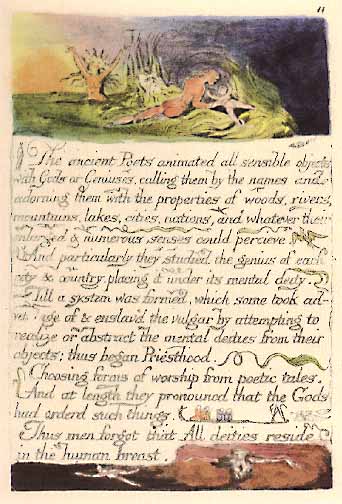
(Plate 11) (of the Marriage of Heaven and Hell)
"The ancient Poets animated all sensible objects with Gods or Geniuses, calling them by the names and adorning them with the properties of woods, rivers, mountains, lakes, cities, nations, and whatever their enlarged & numerous senses could percieve.

And particularly they studied the genius of each city & country, placing it under its mental deity.

Till a system was formed, which some took advantage of & enslav'd the vulgar by attempting to realize or abstract the mental deities from their objects; thus began Priesthood.

Choosing forms of worship from poetic tales.
And at length they pronounc'd that the Gods had order'd such things.
Thus men forgot that All deities reside in the human breast."
According to Blake God is within-- you and me, everyone. In this he closely resembled the Quakers who fundamentally speak of that of God in you/me/everyone. The God within is creative, a Creator of Art. This depends upon imagination, intuition, the expression of spiritual/eternal ideas in tangible things-- like words (the Bible), music, and representations of the human form in its various states.

Here's an example in the Laocoon (E274) of how Blake expressed this idea:
"Prayer is the Study of Art
Praise is the Practise of Art
Fasting &c. all relate to Art
The outward Ceremony is Antichrist
Without Unceasing Practise nothing can be done

Practise is Art If you leave off you are Lost

A Poet a Painter a Musician an Architect: the Man
Or Woman who is not one of these is not a
Christian"

Saturday, July 3, 2010

LEVELS of EXISTENCE II

Continuation of July 1 post.

BEULAH

Through Los generation supplies belief in the Eternal values using reason and the senses, (although confined in the illusion of time and space). Beulah supplies knowledge of the Eternal through the imagination which can transcend material limits. Beulah like generation is a world of the sexes, but in Beulah the male and female are married, each plays a role and accepts the designed functions. Beulah is a place of rest and repose where the contraries are equally true. The active nature of the male is in abeyance and the female is obedient. The delicate balance of Beulah however is maintained through illusion which is not to be taken for reality. Reality is unified as in Eden; Beulah maintains the illusion of duality.

Page 86: "...so long as love remains self-sacrificing, man retains his faith in a spiritual reality beyond the world of appearance. When, however, love fails, faith is lost and the finite mind seeks for reality within the finite form."Percival

Man is not meant to remain in Beulah for it is a place of retreat and renewal. Upward to Eden or downward to Generation are the options offered. A desire to remain in Beulah destroys the beautiful balance and sends man backward. Beulah shares with Eden evanescence, fluidity the ability to escape time and space. Love and forgiveness are the methods of maintaining Beulah as the environs of Eden.

EDEN

William Blake's personal goal was to spend as much time in Eden as possible. To transcend to fourfold vision, the ability to perceive the infinite, was his supreme delight. But Eden meant more than vision it also means creative energy, forgiveness, brotherhood and the oneness of wholeness. Beulah is the condition of rest and repose for a purpose - that of returning to the energetic activity of Eden.

Page 50: "In Eden 'there is no restraint from the greatest of all restraints on imaginative living - the selfhood. The self knows it, too, but fixes and makes manifest the energy which flows into it from God.'"

In this life the intensity and clarity of Eden is more than the soul can long endure. Thus the visionary world is fled for the worlds of appearance which have already been described.

Three Levels of Existence are pictured in Plate 9 of Jerusalem:
Pastoral world - Beulah
Dualistic world -Generation
Disintegrated World - Ulro.

A Descriptive Catalogue (E 541)
"The Prophets describe what they saw in Vision as real and existing men whom they saw with their imaginative and immortal organs; the Apostles the same; the clearer the organ the more distinct the object. A Spirit and a Vision are not, as the modern philosophy supposes, a cloudy vapour or a nothing: they are organized and minutely articulated beyond all that the mortal and perishing nature can produce. He who does not imagine in stronger and better lineaments, and in stronger and better light than his perishing mortal eye can see does not imagine at all. The painter of this work asserts that all his imaginations appear to him infinitely more perfect and more minutely organized than any thing seen by his mortal eye"

Thursday, July 1, 2010

LEVELS of EXISTENCE

I am indebted to Milton O Percival's William Blake's Circle of Destiny for the understanding I have of this subject. Quotations are from his book. This book is rarely for sale at a modest price but is available in many libraries. To find a library near you from which it is available try worldcat.com. If your local library doesn't have the book, you can ask them to obtain it on interlibrary loan.

Blake sees the status of man in terms of levels of existence. At each level man is capable of living according to certain principles which represent his level of consciousness. In ascending order the worlds through man may progress are Ulro, Generation, Beulah and Eden. Each level is characterized by the ability of man to perceive at that level, and the structure which results from that level of perception.

ULRO

So we have in Ulro the ability to perceive at only the level of single or literal vision. Meaning beyond the superficial material level escapes single vision. Looking for information about the relationship between William and Catherine Blake in the prophetic books is confining oneself to Ulro thought, since it is looking for outward sensory data about outward sensory events. The most striking facet of perception in Ulro is the inability to see spiritual significance in anything that comes to us. Perception is turned outward only; the inner world is thought to be non-existent. Seeing only an outward existence creates the world of matter, rigid and passive.

Page 87: "This void in the empty East is Ulro, the Hell of Blake's myth. In this void the selfish emotions are activated by rational doubts and fears. ..Everything in this world is 'without internal light.' The souls which inhabit it have 'neither lineament nor form.'"

Ulro is the bottom of man's fall from eternity. If the fall had continued man would have fallen into the abyss of non-entity. The limits of Adam and Satan were set to prevent that from happening. When the limits were defined, man could start the rebuilding and return.

GENERATION

The agent for the the process of rising or returning is Los who gives form or concrete expression to the abstractions of Urizen in Ulro. In this way error is revealed for what it is and can be repudiated. This is our world where ideas and emotions are expressed in behaviors and personalities.

This is man's condition in the generative world: he is confined to the world of time and space, he is vegetated in a body whose limitations he cannot escape, he is receiving his information from shrunken senses. But there is more going on in generation; it is the world of transition from the outward and corporeal to the inward and spiritual. Los in the role of the holy Spirit is the agent of transformation.

Los's job is breaking down and building up. Breaking down by revealing error for what it is. Building up by creating Golgonooza in which man may exercise imagination. Spiritual vision becomes possible through the development of symbolic thinking. The object seen outwardly and corporeally becomes capable of carrying meaning which is inward and spiritual. 'The world of generation might indeed be thought of as a training school in vision.' (Page 272)

Page 273: "When the struggle is over, and the world and all that is therein can be seen, calm and assuredly, as the manifestation of spirit - then the soul has arrived at threefold vision and soft Beulah's light."

'To Be Continued' in my next post.

Wednesday, June 23, 2010

WRATH & PITY

Wrath and Pity were two central facets of Blake's theology, and both words meant to him something very different from the common connotations. Re his reading of them we may exhibit one or the others of these two contraries, the critical faculty and the affirmative one.

Wrath and pity are two aspects of prophetic activity. Wrath personified by Rintrah is the energetic destructive phase. Palamabron epitomizes the gentler constructive expressions.These are the threat and promise of the Old Testament prophets. To make a difference in a world embroiled in exploitation and oppression and tyranny, the first impulse is to express anger and attempt to break down the instruments of oppression. The extreme example is to participate in riot and revolution, but there are milder forms of subversion and non-cooperation all aimed at destroying the structure that perpetuates a system of masters and slaves.

Wrath is motivated by anger at seeing injustice, pity is motivated by compassion at seeing suffering. Pity seeks to comfort and heal, to alleviate the pain of those wounded by the system. Wrath and Pity are contraries not enemies. Their activities supplement each other in fostering change but their functions are incompatible if exercised simultaneously. In a world distorted by misapprehension, wrath may fall on the oppressed and pity on the oppressor.

Wrath and pity can also be viewed in terms of punishment and forgiveness. In comparing Old and New Testament theology, wrath characterizes an aspect of the an Old Testament God who expects obedience to the law and punishes infractions. Jesus teaches in the New Testament that our relationship with the God of mercy, pity, peace and love may be renewed by forgiveness.

Wrath and pity both have creative and destructive aspects. Pity becomes destructive in the hand of Vala who uses the passive emotions as a weapon of control in her outward, feminine, material agenda.

This section from Percival explains how the feminine emotions can be used to build up or tear down; the active masculine could be used to build up as in exposing abuse or to tear down as in promoting war.

Milton O Percival, William Blake's Circle of Destiny, Page 45:
"...Blake has several sets of composite characters. Foremost among them are the Daughters of Beulah and the Daughters of Albion. They are man's feminine powers in two antithetical attitudes. In the Daughters of Beulah we have these powers devoted to the well-being of man; in the Daughters of Albion we have them, in obedience to reason, weaving the "natural" world of spiritual depravity. The one is Jerusalem seen in multiple, the other is Vala-Rahab. The Daughters of Beulah are said to guard the body of Albion during his mortal sleep on the rock of Ages; the Daughters of Albion, to bind down his perceptive powers and submit him to the corporeal illusion. The Daughters of Beulah personify a mercy and pity that is spontaneous and genuine; the Daughters of Albion, a spiritual hate masquerading as mercy and pity in the cruel and spurious forms of the moral law. The Daughters of Beulah, who by their selflessness keep man's senses open, prepare the conditions for a visionary life and are called Daughters of Inspiration. The Daughters of Albion, who in their selfishness bind down man's immortal senses, are called Daughters of Memory."

These passages will give a flavor of Blake's use of wrath and pity in Jerusalem.

Jerusalem, PLATE 88, (E 247)
"The blow of his Hammer is Justice. the swing of his Hammer:
Mercy.
The force of Los's Hammer is eternal Forgiveness;"

Jerusalem, PLATE 65, (E 216)
"To decide Two Worlds with a great decision: a World of Mercy, and
A World of justice: the World of Mercy for Salvation
To cast Luvah into the Wrath, and Albion into the Pity
In the Two Contraries of Humanity & in the Four Regions."

Jerusalem, Plate 77, (E 232)
"But Jesus is the bright Preacher of Life
Creating Nature from this fiery Law,
By self-denial & forgiveness of Sin."

Jerusalem, Plate 79, (E 236)
"For in our battles we the Slain men view with pity and love:
We soon revive them in the secret of our tabernacles
But I Vala, Luvahs daughter, keep his body embalmd in moral laws
With spices of sweet odours of lovely jealous stupefaction:
Within my bosom, lest he arise to life & slay my Luvah
Pity me then O Lamb of God! O Jesus pity me!
Come into Luvahs Tents, and seek not to revive the Dead!"

Jerusalem, Plate 80, (E 237)
"The Spindle turnd in blood & fire: loud sound the trumpets
Of war: the cymbals play loud before the Captains
With Cambel & Gwendolen in dance and solemn song
The Cloud of Rahab vibrating with the Daughters of Albion
Los saw terrified, melted with pity & divided in wrath
He sent them over the narrow seas in pity and love
Among the Four Forests of Albion which overspread all the Earth
They go forth & return swift as a flash of lightning.
Among the tribes of warriors: among the Stones of power!
Against Jerusalem they rage thro all the Nations of Europe
Thro Italy & Grecia, to Lebanon & Persia & India.
The dungeons burst & the Prisoners set free."

Monday, June 21, 2010

EDEN to BEULAH


Milton O Percival's William Blake's Circle of Destiny clarifies many of the mysteries in reading Blake. Percival includes chapters on The Seven Eyes, Sex Symbolism, Astrological Symbolism, and Alchemical Symbolism as well as less specialized subjects which characterize Blake's work. In this passage from his introduction he speaks of many familiar concepts of Blake's which contribute to the movement of fall and return which comprise the Circle of Destiny. Perhaps reading this will help you fit together some of the terms and ideas which form a thread through the maze of Blake's poetry.

Quoting from Percival:
"Even on the supernal level there is a rise and fall, a constant interchange of contraries, a
wheel of departure and return. The exchange of Eden for Beulah involves descent; but so long as Beulah retains its faith in the values of Eden, the fall is not deep or severe, and the return is easy. But if in Beulah the error deepens and the circuit of return is closed, then the wheel has to swing "downwards and outwards," over a greatly expanded periphery, into the worlds of Ulro and Generation. For the punishment for error in Blake's system as in life itself lies in the bitter experience of error. When man decides, as he does in Beulah, without yet realizing the import of his decision, to live the outward, the passive, the feminine, the selfish, and the rational, he must be delivered over into the reality of his dream world in order that he may know it and renounce it. For experience, in Blake's system is remedial. Error runs its course. The spiritual body, like the natural body, labors to throw off infection and in the end succeeds. The path of experience is therefore circular. When the error which may be described as Nature or Natural Religion becomes formulated in man's mind, the cycle over which it is destined to run takes shape and begins to move. This cycle, which descends from Beulah into Ulro and ascends from Ulro by way of Generation into Beulah, where it joins the supernal cycle, is the Circle of Destiny."

Milton, Plate 30, (E130)
"Beulah is evermore Created around Eternity; appearing
To the Inhabitants of Eden, around them on all sides.
But Beulah to its Inhabitants appears within each district
As the beloved infant in his mothers bosom round incircled
With arms of love & pity & sweet compassion. But to
The Sons of Eden the moony habitations of Beulah,
Are from Great Eternity a mild & pleasant Rest.

And it is thus Created. Lo the Eternal Great Humanity
To whom be Glory & Dominion Evermore Amen
Walks among all his awful Family seen in every face
As the breath of the Almighty. such are the words of man to man
In the great Wars of Eternity, in fury of Poetic Inspiration,
To build the Universe stupendous: Mental forms Creating"

Sunday, January 17, 2010

ALBION'S ANGUISH

This post follows the thread in these three posts related to Plate 62 of Jerusalem:

LAMB OF GOD

ALBION & LOS
SEVEN EYES OF GOD

Perhaps Plate 62 of Jerusalem is an attempted summation of Blake's myth up to that point. Putting all of the Old Testament and New Testament allusions in the text, as well as connecting the picture to text on a plate that falls much earlier in the story, points toward an amalgamation of various threads.
COLORED IMAGE: Jerusalem, Plate 62, Albion and Los

In the Illumination on Plate 62, we have an example of how Blake presents the explicit and implicit simultaneously. The explicit is invariably the lessor of his communications. Although the seven spots direct us to the Eyes of God, there is a suggestion of twelve spots. The implied twelve suggests the Zodiac and other instances of twelve entities for which we may seek associations.
The picture itself goes beyond the stated imagery of the text on either Plate 62 or Plate 33. In the introduction to William Blake's Circle of Destiny, Percival presents the overall theme of his book: that when the long cycle comes to an end, it renews (repeats) itself if error is not cast off, or it reaches the Last Judgment which ends all temporal things. Percival sees Blake presenting the whole of the cycle: from the undifferentiated status of Eternity to the Apocalypse where time ends - in all its aspects of politics, science, history, sociology, psychology and religion.

Through the images incorporated in this picture of Albion, Blake may be suggesting a turning point in cosmic events. The ouroboros (seen as a snake around Albion's head), as a representation of cyclical experience reminds us that Albion may break the cycle or repeat it. The peacock feathers surrounding the head remind us that this is a point of transition. The Eyes of God tell us that Albion is under the protection of the Eternals though he has not returned from the world of time. The twelve eyes point to the Zodiac, another image of cyclical movement. (Percival is able to correlate the stages traversed in Blake's myth with passage through the signs of the Zodiac in Chapter VIII of his book.)

Using alchemical symbolism, Percival makes this observation, "The feminine mercury passes from black to white through an intermediate stage in which all the colors assert themselves. The symbol of this stage is the peacock's tail. The appearance of this symbol is a good omen; it means that the fire is doing its work, that death is awakening into life, or, as Paracelsus puts it alchemically, "it showeth the workings of the philosopher's mercury on the vulgar mercury."
Milton O. Percival,
William Blake's Circle of Destiny, Page 206.

Just as Blake wanted us to think of the events of the Old and New Testaments as we read the words of the text, in the illumination he is calling to our minds the seven days of creation, the twelve tribes of Israel, and whatever associations with the numbers seven and twelve which we may have from our reading of history, literature and numerology. The feet, cold to the point of blue death, are surrounded by the fires of destruction and redemption. And what about how Albion grasps the stone tenaciously? The face of fear, anguish and confusion suggests an agonizing decision making process like that undergone by Jesus in the Garden.

Blake bombards us with images, as he makes us ask the question, "Which direction will Albion choose?"

Thanks to Jim and Mark for ideas included in this post.

Thursday, October 29, 2009

FEMALE & MALE

Nobody can really explain Blake, and that's the way he wanted it. We can listen to him, try to experience with him, and draw from our own lives scraps and pictures to associate with his words and images. So do what you can with what he says here.

Four Zoas, Night 5, Verse 2 (E302)

"In Eden Females sleep the winter in soft silken veils
But Males immortal live renewd by female deaths. in soft
Delight they die & they revive in spring with music & songs
Enion said Farewell I die I hide from thy searching eyes"

Milton Percival says in Circle of Destiny on page 56:

"The form dies in order that the imaginative impulse may be released for new expression. The masculine creative world of Eden is continually sustained by feminine self-sacrifice in Beulah."Males immortal live, renewed by female deaths." The obedience of outward form to inner vision extends even to the landscape....(spaces of Beulah)...are merciful illusions, provided for the repose of the mind which has wearied of the visionary reality of Eden. They characterize the hypothetical age in which the visionary life that Blake enjoyed in ecstasy was a habitual experience. In contrast to the spaces of Beulah, which are so readily transcended, are the "Satanic spaces" of Ulro, which limit and enslave the mind that beholds them."

Damon called the Emanation the '''counterpart" of the fundamentally bisexual male.'

In Jerusalem, plate 88 (E246), we learn why the female Emanations are so essential to man.

"When in Eternity Man converses with Man they enter
Into each others Bosom (which are Universes of delight)
In mutual interchange. and first their Emanations meet
Surrounded by their Children. if they embrace & comingle
The Human Four-fold Forms mingle also in thunders of Intellect
But if the Emanations mingle not; with storms & agitations
Of earthquakes & consuming fires they roll apart in fear
For Man cannot unite with Man but by their Emanations
Which stand both Male & Female at the Gates of each Humanity"

Blake didn't depreciate the role of the female, nor did he mean what we usually mean when we use the term. The female to Blake is an image which carries many meanings but without her, man would never reach Eternity.

Albion Asleep, Jerusalem as Butterfly